
Edible Book Day (April 1)/Children’s Picture Book Day (April 2)
Edible Book Day—more formally known as the International Edible Book Festival—is a playful celebration that combines literature and food. It was first created in 2000 by Judith A. Hoffberg, a book artist and founder of the International Edible Book Festival, along with artist Béatrice Coron. The idea was to invite participants to create edible artworks inspired by books—either by shaping food like books, illustrating literary scenes in edible form, or making pun-based “book” dishes. The goal was to celebrate reading, creativity, and the book arts in a fun, accessible way.
The event is traditionally held on April 1, the birthday of French gastronome Jean Anthelme Brillat-Savarin, author of The Physiology of Taste, tying together culinary appreciation and literary culture. Since its founding, Edible Book Day has grown into a worldwide phenomenon, with libraries, schools, museums, and bookstores hosting their own versions of the festival. Participants display their creations—often with clever titles or literary references—before ultimately eating them, reinforcing the event’s lighthearted motto: “Have your book and eat it too.”
International Children’s Book Day is celebrated each year on April 2, the birthday of Danish author Hans Christian Andersen, whose stories like The Little Mermaid and The Ugly Duckling have become classics of children’s literature. The day was established in 1967 by the International Board on Books for Young People (IBBY), a nonprofit dedicated to promoting international understanding through children’s books. Its purpose is to inspire a love of reading and to call attention to the importance of high-quality children’s literature around the world.
Each year, a different national section of IBBY sponsors the celebration, selecting a theme and inviting a prominent author to write a message to children and a well-known illustrator to design a poster. Schools, libraries, and bookstores mark the occasion with read-alouds, book displays, storytelling sessions, and creative activities that highlight the joy and value of picture books and early reading. The emphasis is not only on entertainment, but also on how illustrated stories help children develop language skills, empathy, and imagination from an early age.
While the day broadly celebrates all children’s books, picture books often take center stage because of their unique blend of visual art and storytelling. From timeless works like Where the Wild Things Are by Maurice Sendak to newer, diverse titles from around the globe, the celebration highlights how pictures and words work together to create meaningful, memorable reading experiences for young audiences.
Zoe Bernard
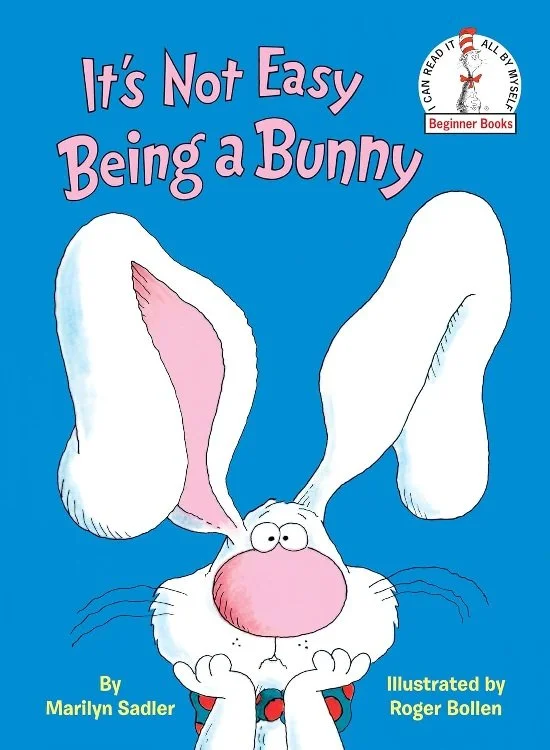
It’s Not Easy Being a Bunny
Marilyn Sadler (Author)
Roger Bollen (Illustrator)
Random House Books for Young Readers
September 12, 1983
1 bow-tie-wearing FunnyBunny
A dash identity crisis
Plate cooked carrots
2 big ears
1 bear family
½ cup hibernation
1 bird family
2 tsp. flight attempt
1 beaver family
3 cups hard work
1 pig family
2 large bowls mud
1 moose family
5 tbsp. moose calls
1 possum family
2 tsp. big headache
1 skunk family
¼ cup skunk aroma
1 big bunny family
4 cups home sweet home
2 tubs of icing, love flavor
Add the identity crisis to the FunnyBunny.
Mash the carrots into the big ears.
In separate bowls, mix together all other animal ingredients. Discard once mixed.
In another big bowl, thoroughly mix the big bunny family and the home sweet home.
Bake in the oven for two hours, or until golden brown.
Ice with love.
Why It’s Beneficial to Read to Your Children
Reading aloud to your child is important, no matter what age they are. Research shows babies’ brains prepare for speech months before they actually say any words, so it’s immensely helpful for them to start hearing language early. Then, as children get older, you can make reading time a back and forth, question and answer session (called “dialogic reading”) and use as many new and different words as possible to help them develop their emerging language skills. Dialogic reading also helps children develop their critical thinking skills. Make your child a lifelong book lover by making “story time” a part of every day!
Davis Chung
Hurray for Bobo
Joan Savage (Author)
Berta Schwartz (Illustrator)
Childrens Press
January 1, 1947
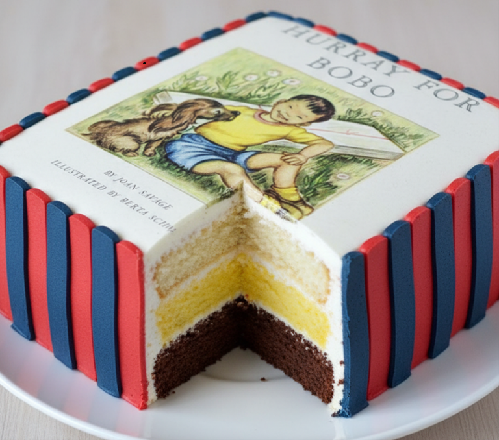
Three-layer cake; chocolate, classic white, and classic yellow.
White cream-cheese frosting with alternating decorative lines of blue and red.
I received this book when I was four years old. Then, I understood only the top layer: a child looking for friends. As an adult, I cut through to the middle and base layers to see Bobo’s journey from disappointment, to finding an ally, to demonstrating he had something to offer, and persisting rather than changing to fit in.
The layers of my cake have different colors as do the children in the story. The inter-racial mixing is not mentioned in the book and only seen in the illustrations. Today, this would go unnoticed. However, for the year it was published, that was as unexpected as my cake with different layers.
The icing, my favorite part of any cake, is a thick, white frosting with stripes of red and blue around the sides. This icing covers those surface differences and wraps around the layers creating a wonderfully sweet whole.
Keith Estes
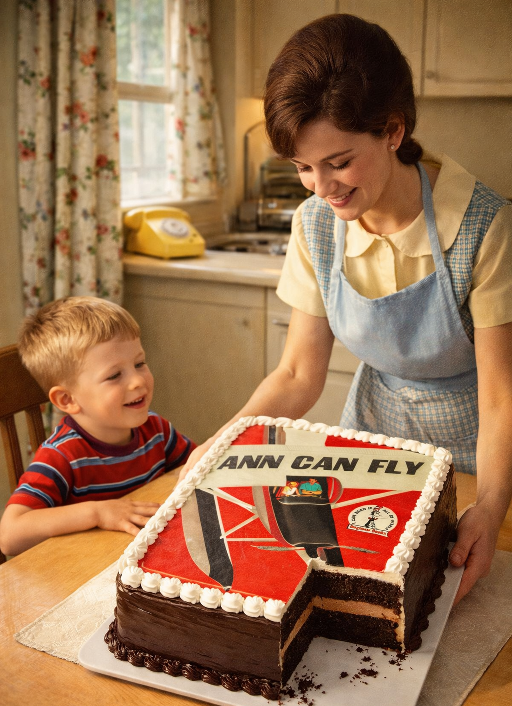
Ann Can Fly — A Recipe for Adventure
Fred Phleger (Author)
Robert Lopshire (Illustrator)
Random House Beginner Books
January 1, 1959
If I could eat a book, I'd eat Ann Can Fly.
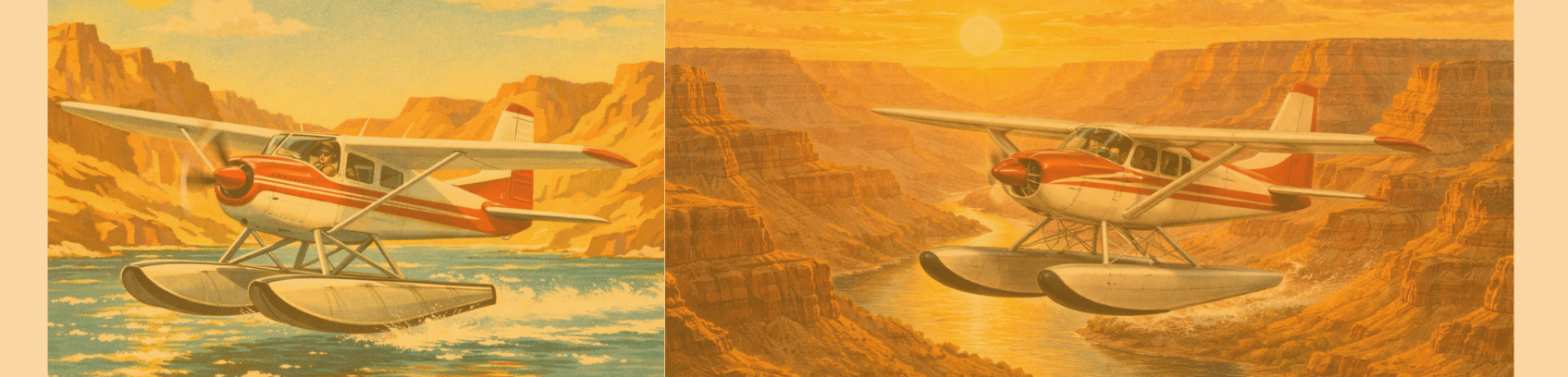
Published in 1959 and written by Fred Phleger with illustrations by Robert Lopshire, this slim little Beginner Books classic is the story of a girl named Ann and her father, who fly his Cessna 182 floatplane from San Diego all the way to summer camp in Colorado. Along the way, they stop at Lake Mead — landing right on the water — and later thread through clouds above the Grand Canyon as the sun sets orange over the desert.
I read this book many times as a very young child and never forgot it. And if it were a cake, here's what would be in it:
Ingredients:
2 cups of wide-open western sky (blue, the particular blue of a 1959 illustration)
1 Cessna 182 on floats, lightly toasted
A generous pour of Lake Mead, still and glassy
3 tablespoons of pre-flight checklist, carefully measured
1 calm, capable father who explains the instruments without making you feel small
A handful of cumulus clouds — the kind that look friendly until they don't
1 sunset over the Grand Canyon, folded in gently
A pinch of that specific childhood feeling that flying is the most normal and wonderful thing in the world
Directions: Mix until the horizon disappears. Serves one child with a lifelong interest in aviation. Pairs well with a sectional chart and a window seat.
Used copies are still out there — AbeBooks, Amazon, the occasional lucky thrift store find. If you work in aviation and you have a young person in your life, track one down. It's 63 pages and it might just change everything.
We welcome thoughtful and respectful discussion.
To keep this space safe and productive, please follow these guidelines:
Be respectful. Personal attacks, name-calling, and abusive language will not be tolerated.
Stay on topic. Keep comments relevant to the content of the post.
No spam or self-promotion. Links and promotions that are not relevant to the discussion will be removed.
Use appropriate language. This is a professional environment—please avoid profanity or offensive language.
Protect privacy. Don’t share personal information—yours or anyone else’s.
You may reply to, like, or flag other comments.
Comments are moderated and may be edited or removed at our discretion.
By commenting, you agree to abide by this policy.