
Taking Flight With Precision: Editing Lessons From the Wright Brothers
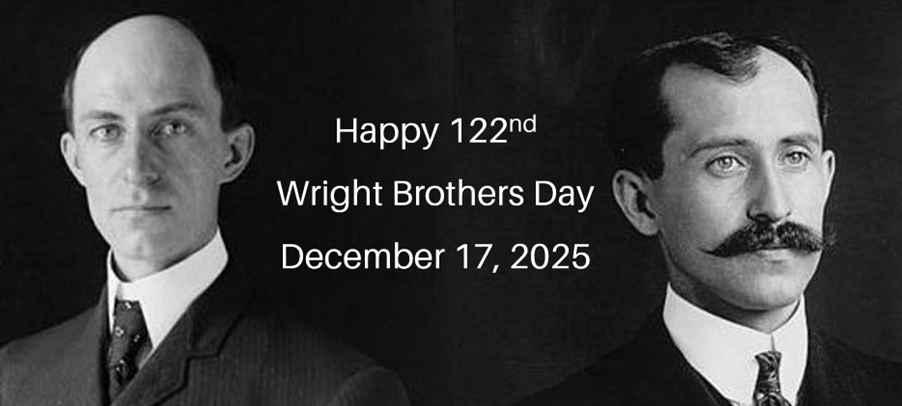
The 122nd anniversary of the Wright brothers’ historic first powered flight on December 17, 1903, at Kitty Hawk, North Carolina is a perfect moment to reflect on how precision took humankind to the skies. Orville and Wilbur Wright were inventors and aviators who documented their work through notes, sketches, and calculations in diaries that chronicled every gust of wind and incremental improvement. Their success wasn’t just about gliders and engines—it was about clarity. In the world of aviation safety, a misplaced decimal or ambiguous instruction can be dangerous. At PAI consulting, clarity is our Polaris, our North Star. Our editors use the same principle on every document we touch: editing isn’t about erasing ideas; it’s about giving them wings.
In the spirit of the Wrights’ groundbreaking work, let’s soar through some editing tips inspired by their legacy. We’ll blend aviation history with practical advice to help your technical writing (or holiday newsletter) lift off smoothly. Buckle up—it’s going to be a short, stable flight.
1. Test Your Draft Like a Wind Tunnel: Iterate With Purpose
The Wright brothers didn’t nail their design on the first try. They built over 200 gliders and kites, tweaking them based on the results of their wind tunnel tests. Similarly, your first draft is just a prototype—full of potential but probably riddled with drag.
Editing Tip: After your initial write, step back and “test” it. Read aloud to catch awkward phrasing; does it purr or sputter? Then revise for structure, does the argument build logically? Make another pass for clarity; are jargon terms defined for your audience? Finally, a pass for conciseness; trim excess words like unnecessary weight.
Wright Wisdom:
“If we worked on the assumption that what is accepted as true really is true, there would be little hope of advance.”
Apply that to your edits—question assumptions in your text to propel it forward.
2. Balance Your Elements: The Art of Wing Warping in Words
The Wrights’ breakthrough was wing warping—a system to twist the wings for control, balancing lift and stability. In writing, imbalance shows up as lopsided sentences: too many clauses in too many directions or passive voice weighing things down.
Editing Tip: Aim for active voice where possible to keep your prose agile. For example, swap “The report was reviewed by the team” for “The team reviewed the report.” In technical docs, use parallel structure, such as the same verb tense, for lists—think of it as synchronized ailerons on the wings:
Pilots must—
check fuel levels,
inspect controls, and
verify weather conditions.”
This creates rhythm and reduces reader fatigue.
3. Log Every Detail: The Power of Precise Documentation
Orville’s post-flight journal entry? A terse “Success. Four flights Thursday morning. All against twenty‑one‑mile wind. Started from level with engine power alone...” No fluff—just facts that informed future flights. In editing, this translates to accuracy in data and citations.
Editing Tip: Treat footnotes and references like flight logs: consistent, verifiable, and essential. Showing your sources tells the reader you are serious. Watch for homophones—our nemesis in safety writing: “brake” vs. “break,” or “affect” vs. “effect.” A quick search-and-replace in Word can ground these gremlins before they cause a stall.
Fun Fact: The Wrights’ own publications, like their 1901 Journal of the Western Society of Engineers article, were edited for precision to convince skeptics. Poor editing there might have kept flight grounded!
4. Land Smoothly: Why Editing Matters in Aviation and Beyond
Just as the Wright brothers’ careful craftsmanship turned dreams into 12 seconds of glory, sharp editing turns rough drafts into reliable guides. At PAI Consulting, we help aviation pros navigate safety challenges. We know that clear communication isn’t optional—it’s the engine that keeps us aloft.
This Wright Brothers Day, celebrate by editing something small: an email, a procedure outline, or even this post; stet if you like it as is. What’s your favorite “flight” metaphor for writing? Share in the comments—we’d love to hear how you keep your words airborne.
If you’re prepping aviation docs for the holidays, check out our earlier post on Commonly Confused Words for Your Holiday Letters for extra lift.
Back to Stet Happens: All Things Editorial home.
Do you have questions or concerns about editorial matters? Share them with us!
PAI Consulting | Helping you succeed. Learn more.
Any opinions expressed in this article are those of the author and not the opinion of PAI Consulting. In addition, this article may contain links to third-party websites. PAI Consulting does not endorse or make any representations about them, or any information, software, or other products or materials found there, or any results that may be obtained from using them.
We welcome thoughtful and respectful discussion.
To keep this space safe and productive, please follow these guidelines:
Be respectful. Personal attacks, name-calling, and abusive language will not be tolerated.
Stay on topic. Keep comments relevant to the content of the post.
No spam or self-promotion. Links and promotions that are not relevant to the discussion will be removed.
Use appropriate language. This is a professional environment—please avoid profanity or offensive language.
Protect privacy. Don’t share personal information—yours or anyone else’s.
You may reply to, like, or flag other comments.
Comments are moderated and may be edited or removed at our discretion.
By commenting, you agree to abide by this policy.