
How to Find the Perfect Outside Vendors for Your Next Conference

When planning a conference, your venue and agenda may take center stage (see how to create a fantastic agenda here), but the outside vendors you choose often determine how smoothly everything runs. From transporting attendees to hosting an offsite dinner to booking entertainment, external partners can either elevate your event or create unexpected challenges.
Here is a guide to finding the right outside vendors and building partnerships that make your conference memorable for all the right reasons.
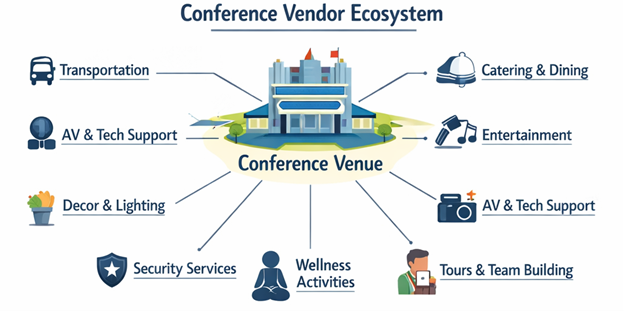
🧭1. Start With Your Needs: What Will Require an Outside Vendor?
Before you begin your search, map out the services your venue does not cover. Common categories include—
🚌Transportation
Shuttle buses for hotels and venue connections
Group airport transfers
VIP car and chauffeur services
Disability‑accessible transportation options
🍽️Offsite Dining and Catering
Private dining at local restaurants
Caterers for offsite receptions or special events
Food trucks for relaxed networking sessions
Specialty food providers, such as allergy‑friendly options or cultural cuisine experts
🎶Entertainment Providers
Live bands or DJs
Comedians or speakers
Cultural or immersive performances
Interactive options, such as magicians, photo booths, or improv groups
“Clarifying your needs early will help prevent last‑minute scrambling.”
🧩Additional Categories to Consider
Decor and Theming:
🌸florists,
💡lighting experts,
🪑rental companies
Audiovisual (AV) and Tech Support:
🎧mobile stage production,
📡hybrid streaming providers
Security:
🛡️private security teams,
🎒bag‑check services,
👥crowd‑control staff
Wellness Add‑ons:
🧘yoga instructors,
🧠meditation leaders,
💺massage‑chair providers
Experiential Options:
🗺️tour companies,
🤝team‑building facilitators
Clarifying your needs early will help prevent last‑minute scrambling.
🎯2. Look for Vendors Who Understand Conferences Instead of General Events
Conferences involve unique logistics and expectations that differ from other kinds of events, such as weddings, festivals, or small private parties. When evaluating vendors, ask questions such as—
📊 How many conferences have you supported?
⏱️ Are you familiar with tight turnaround windows and large group movement?
👤 Will you provide a dedicated point of contact?
♿ Are you familiar with Americans with Disabilities Act (ADA), safety, and compliance requirements?
Vendors with conference experience already understand load‑in schedules, attendee flow, corporate standards, and contingency planning, meaning you won’t have to spend extra time getting them up to speed or fixing mistakes.
🤝3. Ask Your Venue and Your Network for Recommendations
Word‑of‑mouth recommendations can be incredibly valuable—your venue’s event coordinator is one of the best places to start, as they often know—
✅Which vendors are already approved or recommended
📋Which providers understand the venue’s rules regarding AV, decor, and/or catering
⚠️Which partners are reliable and which ones have previously caused issues
You can also reach out to—
🏙️Local tourism boards or convention and visitor bureaus
📅Other conference planners
🏢Professional associations
💬Past clients or industry colleagues
“A vendor’s communication habits often matter more than the cost itself.”
🔗4. Evaluate Vendors Like Partners Instead of Transactional Providers
Great vendors act as collaborators, not simple suppliers. Look for vendors who—
⚡Respond promptly
🧠Ask thoughtful questions about your goals
🛠️Offer practical solutions instead of just quoting prices
⏰Arrive early to meetings
📄Submit detailed proposals
📢Communicate clearly and consistently
A vendor’s communication habits often matter more than the cost itself.
📝5. Get Everything in Writing
Before signing an agreement, confirm your contract includes—
📦The exact scope of services
💵Detailed pricing
🛠️Set‑up and breakdown schedules
👥Staffing levels
❌Cancellation and refund terms
⏱️Overtime fees
🛡️Insurance requirements
⚠️Safety and compliance details
Clear documentation helps avoid last‑minute surprises.
🔁6. Always Plan for Backup Vendors
This is not pessimism—it is good planning. Consider having backup options for—
🚌Transportation, in case of mechanical issues
🎤Entertainment, in case of illness or travel problems
🍴Catering, especially for outdoor events affected by weather
💻AV services, in case of equipment failure
Even a short backup list can save your event.
🌱7. Build Long‑term Vendor Relationships
If a vendor performs well, treat them like part of your planning team.
💌Send thank‑you messages
⭐Offer testimonials or reviews
💳Pay invoices promptly
🔄Invite them to work with you again
Vendors who feel appreciated often go above and beyond.
📍8. Consider Local Vendors Whenever Possible
Local partners can offer important advantages because they have—
🚚Lower transportation and delivery costs
⚡Faster response times
📜Better knowledge of local regulations and logistics
🌎Authentic experiences for out‑of‑town attendees
Local businesses also tend to value partnerships with conferences and may provide creative ideas or unique enhancements.
⭐Final Thoughts
Outside vendors can turn a solid conference into a standout experience. Start early, ask the right questions, communicate clearly, and document everything. With the right partners, your conference will run smoothly and leave a lasting impression.
Need help identifying, vetting, or coordinating outside vendors for your next conference?
Contact us today for a consultation and let our conference planning experts help your conferences succeed.
Contact us for a consultationBack to Meeting Your Needs home.
Do you have questions or concerns about meetings? Share them with us!
PAI Consulting | Helping you succeed. Learn more.
Any opinions expressed in this article are those of the author and not the opinion of PAI Consulting. In addition, this article may contain links to third-party websites. PAI Consulting does not endorse or make any representations about them, or any information, software, or other products or materials found there, or any results that may be obtained from using them.
We welcome thoughtful and respectful discussion.
To keep this space safe and productive, please follow these guidelines:
Be respectful. Personal attacks, name-calling, and abusive language will not be tolerated.
Stay on topic. Keep comments relevant to the content of the post.
No spam or self-promotion. Links and promotions that are not relevant to the discussion will be removed.
Use appropriate language. This is a professional environment—please avoid profanity or offensive language.
Protect privacy. Don’t share personal information—yours or anyone else’s.
You may reply to, like, or flag other comments.
Comments are moderated and may be edited or removed at our discretion.
By commenting, you agree to abide by this policy.